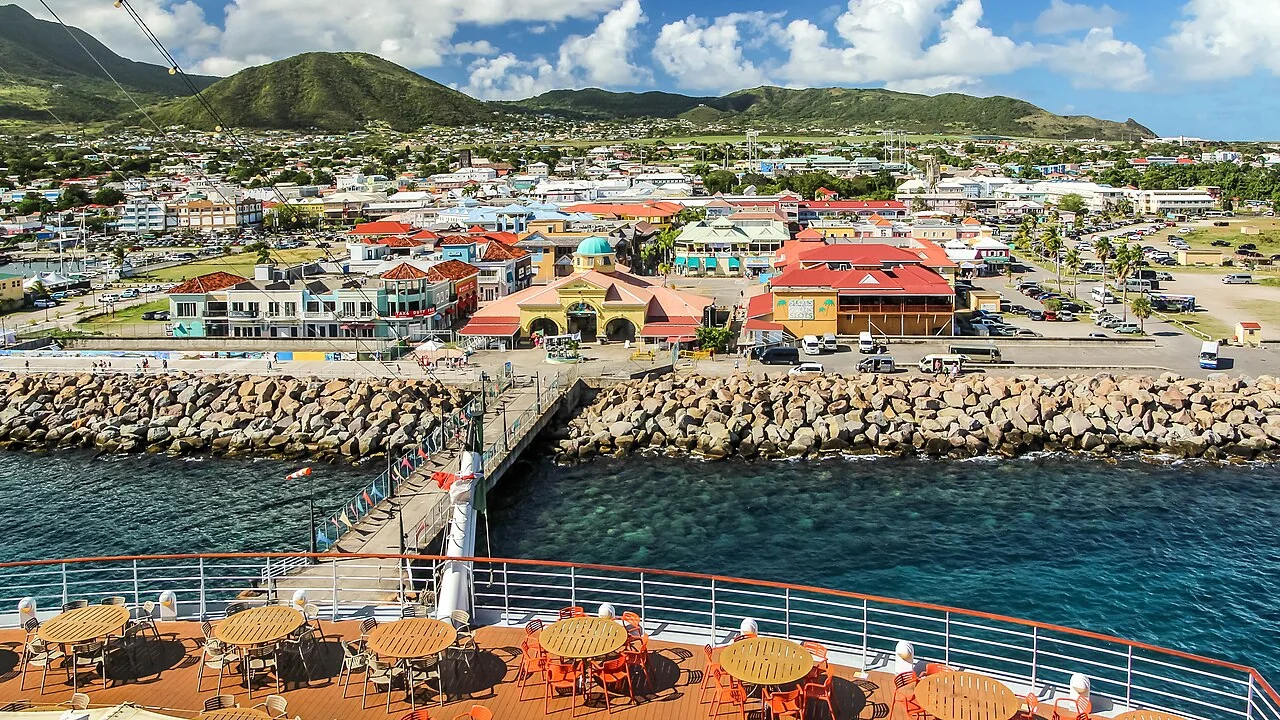
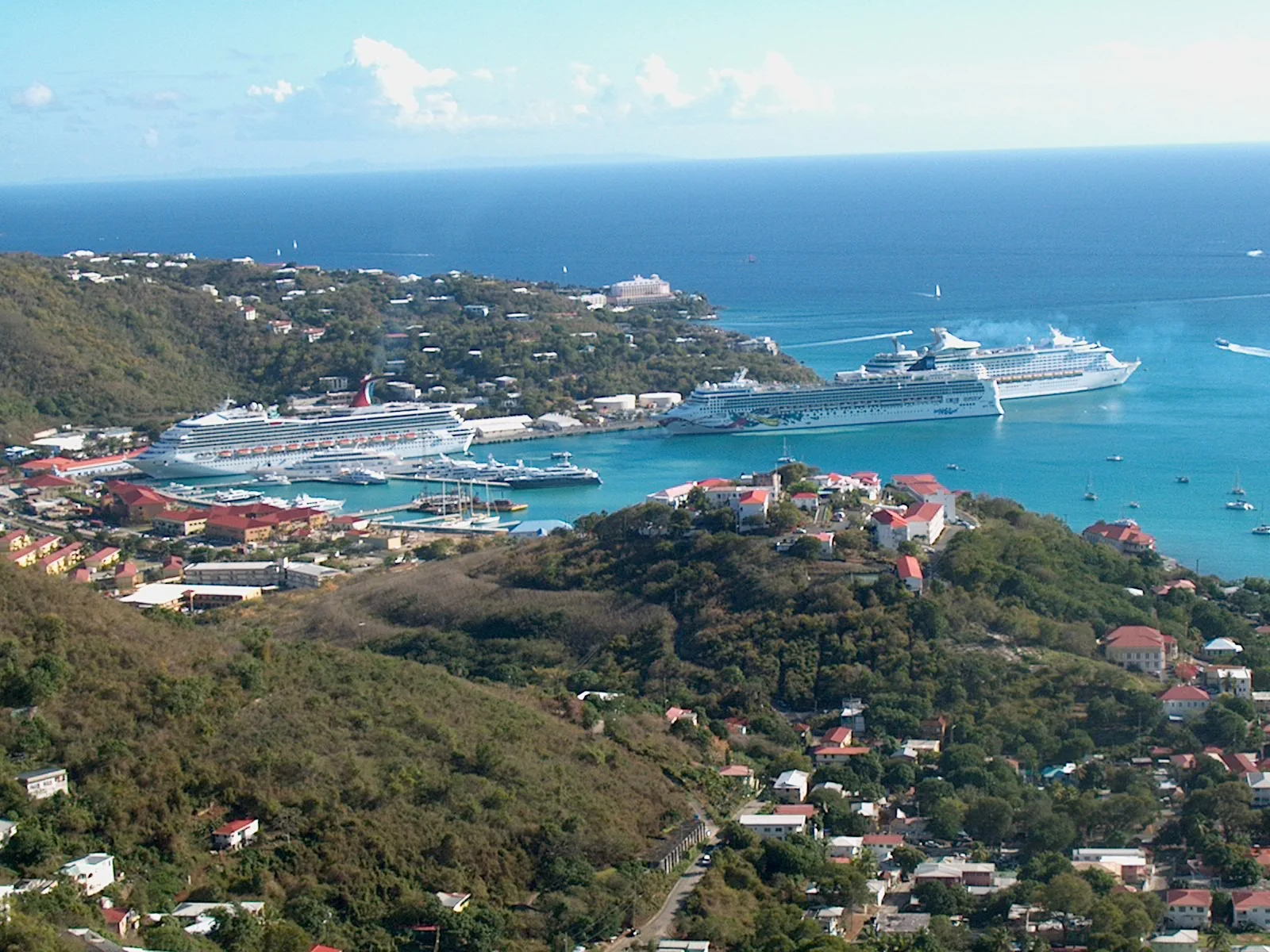
Your usable excursion time is less than the full time printed between a ship's arrival and departure. A realistic plan accounts for disembarkation, meeting, transfers, the activity, the return and the ship's all-aboard requirement. Port-day guidance emphasizes the importance of planning the return; your own ship's instructions remain decisive.
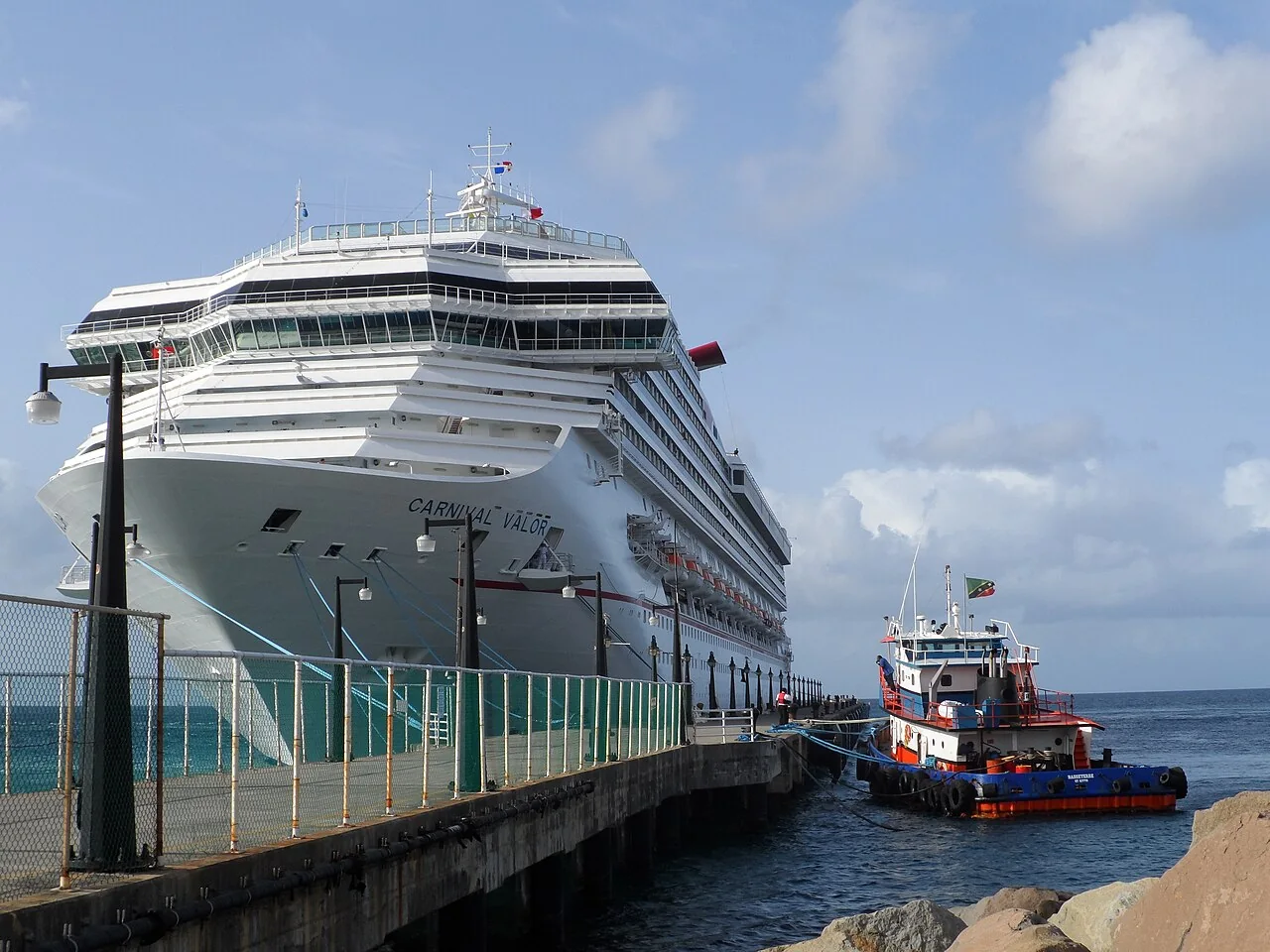
A cruise ship beside the pier and a tug in Basseterre, St Kitts.Gertjan R.
Your island visit
Perfect Life Charters
4 min read
Work backward from all-aboard
Begin with the time the cruise line requires you to be back, not the time the ship is scheduled to sail. Ask the excursion provider to propose an appropriate return margin and explain the route. There is no single buffer that can be responsibly applied to every boat, pickup point, weather situation and passenger group.
Then account for the time needed between the excursion's endpoint and the ship. Returning to a beach or marina is not necessarily the same as being back at Port Zante.
Separate activity time from transport time
A four-hour activity may require more than four hours of your port day once the surrounding steps are included. Ask where the clock starts and ends in the quoted duration.
A useful comparison treats two offers consistently. One might include a transfer while another expects you to arrange it. The longer headline duration is not automatically better value if it consumes all flexibility in the schedule.
Use a simple planning model
Take the confirmed all-aboard time, subtract the agreed return margin, the final transfer, the activity and the outward arrangements. The result tells you when you need to be ready. If that is earlier than you can realistically disembark and meet, the plan does not fit.
Do not solve a mismatch by deleting every margin. Choose a shorter activity or a different experience. A day that only works under perfect conditions is not a comfortable holiday plan.
Decide what gets dropped first
Shopping, an extra viewpoint and a second meal stop should be clearly optional. Agree on the priority before the outing so that no one has to negotiate it while time is running short.
Ask about itinerary changes and cancellation terms in advance. An independent operator's policy is not automatically the same as the cruise line's excursion policy.
Send your ship details to Perfect Life Charters and let the team assess a suitable outing. The Port Zante guide helps you choose the activity; this timing model helps decide whether it actually belongs in your available day.
Could not have been more professional. Would highly recommend!
A worked example makes the limits obvious
Suppose your ship requires everyone aboard at 4:30 p.m. The example below works backward from that deadline. Its allowances are invented to show the arithmetic; they are not local transfer estimates or a recommended safety margin. Replace each one with the arrangement agreed for your ship, activity and date.
Scroll across to compare.
| Example step | Time | What it means |
|---|---|---|
| Ship’s all-aboard deadline | 4:30 p.m. | The hard endpoint in this example |
| Planned arrival back at the ship | 3:30 p.m. | One hour earlier for this illustration |
| Leave the excursion endpoint | 3:00 p.m. | Allowing a hypothetical 30-minute final transfer |
| Start a four-hour activity | 11:00 a.m. | The activity must finish by 3:00 p.m. |
| Meet for transfer and boarding | 10:15 a.m. | Allowing a hypothetical 45 minutes before it starts |
If your group cannot realistically reach the meeting point by 10:15 a.m., this example does not fit. Shorten or change the outing. Moving every allowance to its most optimistic value just hides the mismatch.
Give each time a place and a clock
Write down whether a time means leaving the ship, meeting a driver, boarding the charter, returning to a dock or being back aboard the cruise ship. Then state whether it is ship time or local island time. A message saying back at three is incomplete until both the location and the clock are clear.
Royal Caribbean’s published guidance tells guests to verify the all-aboard time onboard and at the gangway. Apply the instructions from your own cruise line and sailing. Your phone’s clock, the advertised sailing time and a provider’s departure time should never be assumed to describe the same deadline.
Ask what happens when the plan changes
Before booking, ask how late disembarkation, a changed port call or a shortened outing will be handled. Find out whom to contact and which terms apply to a missed call or an operator cancellation. Those answers help you compare the actual arrangement rather than only the excursion length.
Keep the optional part at the end small: a drink, a browse through town or shopping near the return point. A second major excursion creates another chain of transfers. For a boat request, send the crew your ship, date and confirmed time window and ask for a complete meeting-to-return outline.